There is a specific formula description
The official page names numerous ingredients rather than relying only on vague phrases such as “secret herbs.” That makes the concept easier to assess and compare with known ingredient research.
Cardio Slim Tea combines familiar botanicals with ambitious claims about blood pressure, circulation, metabolism, and weight. This review looks at what the product page actually says, what published research can and cannot tell us, and which questions matter before buying.
Disclosure: This article is informational and may contain promotional links. It does not replace medical advice, diagnosis, or treatment.

Cardio Slim Tea appears to be a real marketed herbal product with a detailed ingredient list and a stated 60-day guarantee on its product page. Some listed ingredients have relevant human research. However, that does not prove the finished tea lowers blood pressure, removes belly fat, or works through homocysteine in the way the marketing suggests. A careful buyer should treat it as a wellness product, not a substitute for proven hypertension or weight-management care.
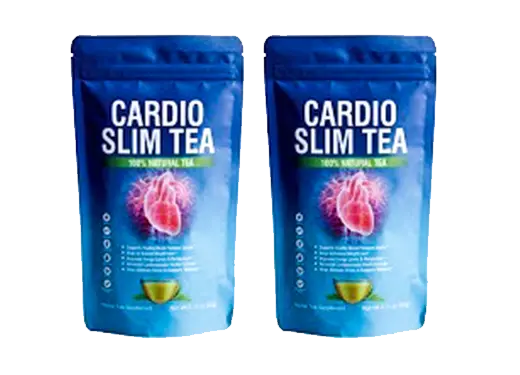
According to the product website, Cardio Slim Tea is a plant-based herbal tea positioned for cardiovascular and metabolic wellness. The page lists a broad formula that includes beetroot powder, decaffeinated green tea, hibiscus flowers, ginger root, oolong tea, chamomile, dandelion leaves, hawthorn berries, lemongrass, trimethylglycine or TMG, grapeseed extract, ginseng, curcumin, cinnamon, monk fruit, and natural lemon and mint flavor.
The central marketing story connects elevated homocysteine with blood-pressure imbalance, circulation problems, and abdominal fat. The website says the formula is intended to support homocysteine metabolism while also providing botanicals associated with circulation, antioxidant activity, digestion, fluid balance, and metabolism.
That is a coherent product positioning, but coherence is not the same as clinical validation. A multi-ingredient blend can behave differently from each ingredient studied alone, and dose matters. The most useful way to review this tea is therefore to separate three layers: what the manufacturer states, what research suggests about selected ingredients, and what has been demonstrated for the complete formula.
The fairest answer is “legitimate enough to evaluate, but not proven enough to accept every marketing claim at face value.” Here is what supports that conclusion.
The official page names numerous ingredients rather than relying only on vague phrases such as “secret herbs.” That makes the concept easier to assess and compare with known ingredient research.
The website provides preparation guidance and advertises a 60-day money-back promise. Buyers should still read the current checkout and refund terms because online offers can change.
Hibiscus and beetroot, for example, have been studied in humans for blood-pressure-related outcomes. This supports interest in the ingredients, although it does not validate the complete tea.
The table below uses cautious language on purpose. Research on a botanical can make a formula scientifically plausible without proving that a commercial blend delivers the same effect.
| Listed ingredient | Why it may be included | Practical evidence context |
|---|---|---|
| Hibiscus | Cardiovascular and blood-pressure support | A randomized trial in pre- and mildly hypertensive adults reported lower blood pressure with daily hibiscus tea. This is ingredient-level evidence, not a trial of Cardio Slim Tea. |
| Beetroot | Nitrate-related vascular support and circulation | Human trials and reviews have reported systolic blood-pressure effects from nitrate-rich beetroot preparations, but findings vary by population, dose, preparation, and study design. |
| Decaffeinated green tea | Metabolic and antioxidant positioning | Green-tea catechins have been studied for body weight. More recent research suggests any added weight-loss effect can be modest, especially compared with the impact of sustained diet and exercise. |
| Ginger | Digestive comfort and general metabolic support | Ginger is widely studied, but outcomes depend heavily on dose and condition. Its presence should not be translated into a guarantee of lower blood pressure or fat loss. |
| Oolong tea | Tea polyphenols and metabolism-focused positioning | Tea compounds are biologically active, yet a caffeine-free or low-caffeine commercial blend may not match preparations used in metabolic studies. |
| TMG | Homocysteine metabolism | TMG, also called betaine, participates in methylation pathways. That biochemical role is real, but it does not establish the marketing idea that one mechanism explains hypertension and belly fat. |
| Hawthorn | Traditional cardiovascular use | Traditional use is not equivalent to proven treatment. It is also a reason medication users should discuss the overall blend with a clinician or pharmacist. |
| Curcumin and cinnamon | Antioxidant and metabolic positioning | Both have large research literatures, but supplement effects depend on extract form, bioavailability, dose, baseline health, and concomitant medications. |
Important: The official page lists ingredients, but a buyer should check the actual package label for serving-specific quantities, allergen information, warnings, and any formulation changes.
Homocysteine is a naturally occurring amino-acid-related compound, and elevated levels have been associated with cardiovascular risk in observational research. The Cardio Slim Tea website goes further by presenting excess homocysteine as an underlying or hidden cause of high blood pressure and stubborn belly fat.
That framing is much stronger than the evidence needed for a responsible consumer conclusion. Association does not automatically establish a single root cause. More importantly, randomized cardiovascular research has shown that lowering homocysteine with B vitamins does not necessarily reduce major cardiovascular events. That does not directly test TMG, this tea, or every possible context; it simply shows why “lower the marker, therefore prevent the outcome” is not a safe assumption.
A practical review should therefore describe the homocysteine pathway as a manufacturer-proposed mechanism, not as settled proof that Cardio Slim Tea corrects hypertension or drives abdominal fat loss. This distinction is one of the biggest differences between a genuine review and a rewritten sales page.
A multi-ingredient herbal blend can be inappropriate for some users even when every ingredient sounds familiar. FDA consumer guidance specifically warns that supplements can interact with medicines and that “natural” does not automatically mean safe.
Extra caution is sensible for anyone using blood-pressure drugs, blood thinners, diabetes medication, heart medication, diuretics, or multiple prescriptions. Ask a doctor or pharmacist to review the full ingredient label.
A product marketed around vascular and blood-pressure effects deserves caution if readings already run low, fluctuate significantly, or are being actively adjusted with treatment.
Pregnant or breastfeeding people, those preparing for surgery, and people with significant kidney, liver, or cardiovascular conditions should seek individualized medical guidance before use.
Check the latest ingredient presentation, usage directions, package options, and guarantee terms directly on the product page before making a decision.
Cardio Slim Tea is best viewed as a multi-ingredient wellness tea with some scientifically interesting components, not as proven treatment for hypertension or a guaranteed fat-loss solution. The product page is detailed enough to evaluate its general concept, and published human research gives reasonable context for selected ingredients such as hibiscus and beetroot. Those are genuine positives.
The main concern is the gap between that ingredient context and the stronger marketing language. A study on hibiscus does not prove Cardio Slim Tea produces the same blood-pressure result. A study on beetroot juice does not tell us what a mixed tea blend will do. Research on green-tea catechins does not justify promising rapid belly-fat loss. And a biochemical story about homocysteine should not be presented as settled proof of a single root cause.
Our practical 2026 verdict: the product is plausible as an optional wellness beverage for an informed adult who understands its limits, checks the label, and has no relevant medication or medical conflict. It is not a responsible replacement for blood-pressure care, prescribed treatment, or evidence-based weight management. Buyers should judge value by transparent labeling, realistic expectations, tolerance, objective tracking, and current refund terms—not by dramatic before-and-after claims.
It is a marketed herbal tea with a product page, disclosed ingredient list, usage guidance, and a stated guarantee. The key limitation is evidence: this review did not identify a peer-reviewed randomized clinical trial of the finished formula, so effectiveness claims should be judged cautiously.
No. Do not stop or replace prescribed medication based on a tea advertisement or online review. People using blood-pressure or cardiovascular medication should discuss the complete ingredient label with a healthcare professional.
The product page lists beetroot powder, decaffeinated green tea, hibiscus, ginger, oolong tea, chamomile, dandelion leaves, hawthorn berries, lemongrass, TMG, grapeseed extract, ginseng, curcumin, cinnamon, monk fruit, and natural lemon and mint flavor.
The official page suggests three to four cups daily after steeping a tea bag for roughly three to five minutes. Follow the actual package label and seek personalized advice when medication or a medical condition is involved.
Product details are attributed to the seller’s page. External research provides context and does not imply that Cardio Slim Tea itself was clinically tested.